
Search is changing rapidly. People are no longer relying only on short keywords such as “digital marketing agency” or “best SEO services.” Increasingly, users are asking longer, more conversational and more specific questions and expecting search engines to provide direct answers.
Google’s AI-powered search experiences, including AI Overviews and AI Mode, are changing how people discover information and websites. Google says AI Mode has surpassed one billion monthly users globally, while AI Overviews has more than 2.5 billion monthly active users.
This shift has increased interest in AEO, or Answer Engine Optimization.
But what exactly is AEO in 2026? How is it different from traditional SEO? And how can businesses prepare their websites for AI-powered search?
Let’s explore.
What Is AEO?
AEO stands for Answer Engine Optimization.
AEO is the practice of creating and structuring content so that it can clearly answer users’ questions and potentially be surfaced by answer-oriented search experiences.
Traditional SEO focuses heavily on helping search engines discover, understand, and rank web pages.
AEO puts additional emphasis on answering specific questions clearly and providing useful, trustworthy information that search systems can understand and reference.
For example, instead of creating a page that only targets:
“digital marketing services”
an AEO-focused content strategy might address questions such as:
- What is digital marketing?
- How does SEO help a business?
- How much does digital marketing cost?
- What is the difference between SEO and Google Ads?
- How can a small business generate leads online?
The objective isn’t simply to insert questions into an article. The content needs to provide genuinely useful answers.
Why Is AEO Important in 2026?
The way people search is becoming more conversational.
Google reports that AI Mode queries are significantly longer than traditional Search queries, and users are increasingly using Search for planning, brainstorming, comparisons and complex questions.
This means businesses need to think beyond individual keywords.
A potential customer may search:
Traditional search:
SEO agency Chennai
A more conversational search could be:
Which SEO strategy should a small business in Chennai use to get more local customers?
The second query contains more context and requires a more detailed answer.
This creates an opportunity for businesses that publish well-structured, useful and original content.
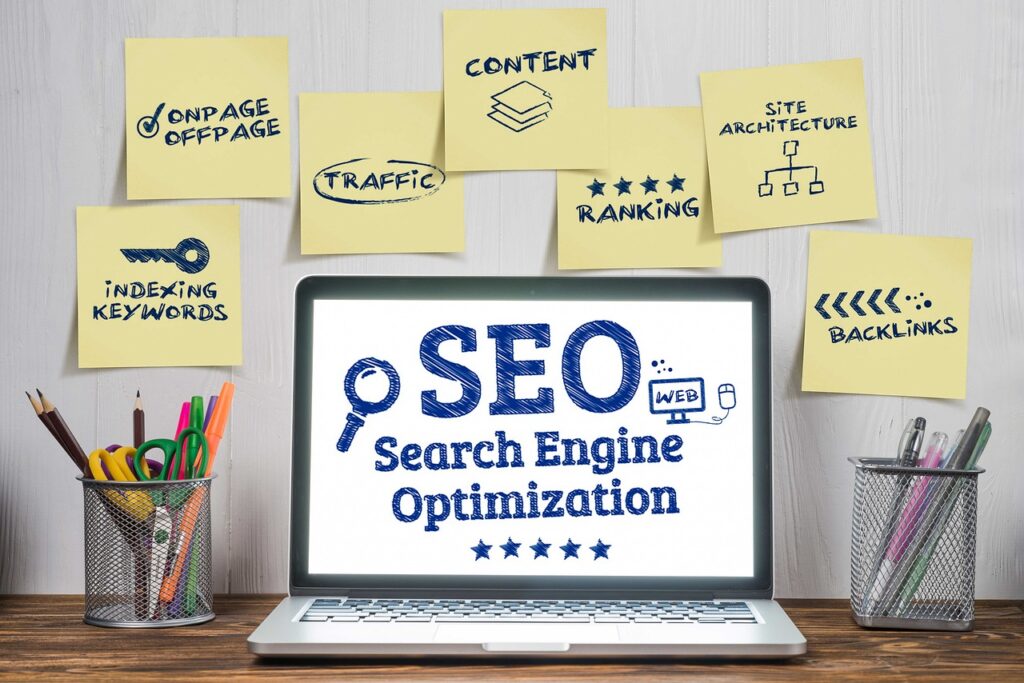
AEO vs SEO: What Is the Difference?
AEO and SEO are closely connected rather than completely separate marketing strategies.
Traditional SEO
SEO focuses on improving a website’s visibility in search engines through areas such as:
- Keyword research
- Search intent
- On-page SEO
- Technical SEO
- Internal linking
- Website performance
- Quality content
- Structured data
- Authority and reputation
AEO
AEO emphasizes the ability of content to provide clear answers to specific questions.
Important areas include:
- Question-based content
- Clear explanations
- Concise answers
- Logical content structure
- First-hand expertise
- Original information
- Supporting evidence
- Natural language
- Strong topical coverage
The important point is that AEO does not replace SEO.
Google’s documentation specifically says that the same foundational SEO practices remain relevant for its AI search features.
Therefore, businesses shouldn’t abandon traditional SEO to chase an entirely separate AEO system.
Instead, they should build an SEO strategy that also makes their content useful for modern AI-powered search experiences.
How Google AI Search Is Changing Discovery
Google AI Overviews and AI Mode can provide AI-generated responses with links to supporting websites.
Google says these experiences are designed to help people explore the web and discover useful websites, and it has been increasing the number of links shown within AI-generated responses.
Google also says AI Mode can handle longer, more complex questions and follow-up conversations.
This means a single user journey can look something like:
Question → AI-generated response → supporting sources → website visit → deeper research → conversion
For businesses, this makes content quality increasingly important.
Your website should not simply contain keywords. It should provide information that gives users a reason to visit and continue exploring.
How to Optimize Content for AEO in 2026
1. Answer the Main Question Clearly
Start by understanding what your target audience actually wants to know.
If your target topic is:
“What is technical SEO?”
don’t spend the first 500 words discussing your company.
Give the reader a clear explanation near the beginning.
Then expand on the topic with examples, benefits, processes and related questions.
This creates a better experience for both users and search systems.
2. Target Long-Tail and Conversational Queries
Modern search increasingly includes longer questions.
Instead of targeting only:
“SEO”
consider related queries such as:
- What is SEO and how does it work?
- How can SEO help a small business?
- How long does SEO take to show results?
- What are the most important SEO factors?
- How can I improve my website’s Google visibility?
These questions can become H2 or H3 sections within a larger article.
3. Use a Clear Heading Structure
A well-organized page is easier for users to navigate.
Use:
H1 — Main topic
H2 — Major sections
H3 — Supporting questions
For example:
H1: SEO Is Changing: What Is AEO in 2026?
H2: What Is AEO?
H2: Why Is AEO Important?
H2: AEO vs SEO
H2: How to Optimize Content for AEO
H3: Answer Questions Clearly
H3: Build Topic Clusters
H3: Use Original Information
This structure makes your content easier to understand and navigate.
4. Build Topic Clusters
One article should not be expected to answer every possible question about a subject.
Instead, create a central pillar article and supporting articles.
For example:
Pillar:
AEO in 2026: Complete Guide
Supporting articles:
- AEO vs SEO
- What Are Google AI Overviews?
- What Is Google AI Mode?
- How to Optimize Content for AI Search
- How AI Search Is Changing Digital Marketing
- SEO for AI Search: Best Practices
Connect these pages using relevant internal links.
This helps users discover related information and gives search engines clearer context about your website’s topics.
5. Create Original, Non-Commodity Content
Simply rewriting information that already exists online is unlikely to give your website a strong competitive advantage.
Google’s current guidance emphasizes the importance of unique, non-commodity content for generative AI Search experiences.
For Elviverzentra, this could include:
- Original marketing examples
- Campaign observations
- SEO experiments
- Case studies
- Screenshots
- First-hand experiences
- Industry analysis
- Local business examples
- Original data
The more useful information your website contributes, the stronger the reason for users to visit your content.
6. Use Structured Data Where Appropriate
Structured data helps Google understand the content of a webpage.
It can provide information about entities and page elements in a standardized format.
Google maintains documentation covering supported structured-data types and explains how structured data can help it understand page content.
For blog content, make sure your technical SEO implementation is correct and that structured data accurately represents what is visible on the page.
However, structured data should not be treated as an AEO shortcut.
Good content and strong technical SEO still matter.
7. Strengthen Internal Linking
Internal links connect related pages within your website.
For example, an AEO article could link naturally to:
SEO services
content marketing services
Google Ads services
This helps users move from informational content toward relevant service pages.
A simple journey could be:
Blog → Educational article → Service page → Contact page
For a digital marketing agency such as Elviverzentra, this can connect your content strategy with your lead-generation strategy.
8. Demonstrate Experience and Expertise
AI-powered search makes information easier to summarize, which increases the value of information that provides genuine expertise and differentiation.
Instead of writing:
“SEO is important for businesses.”
explain:
- Why it matters
- Which businesses benefit
- What problems it solves
- What mistakes businesses make
- What process businesses can follow
- What results should realistically be measured
Adding specific examples makes content more useful.
For Elviverzentra, you could also develop case-study content around website optimization, SEO campaigns, social media campaigns and digital marketing projects.
9. Optimize Images and Multimedia
A modern content strategy shouldn’t rely entirely on text.
Google’s current guidance for generative AI search also highlights the value of high-quality images and video alongside useful content.
Use relevant images that help explain the topic.
For example, an AEO article could include:
Image 1: A visual comparison between traditional SEO and AEO.
Image 2: A diagram showing how a user moves from a question to an AI-generated search response and then to a website.
Use descriptive filenames and meaningful alt text rather than generic names such as image1.jpg.
10. Don’t Keyword Stuff Your AEO Content
One of the biggest mistakes businesses can make is treating AEO as another keyword-stuffing strategy.
Repeating phrases such as:
AEO in 2026, AEO in 2026, AEO in 2026
doesn’t make content more useful.
Instead, use related terminology naturally:
- Answer Engine Optimization
- AI Search
- AI Overviews
- AI Mode
- search intent
- conversational queries
- semantic search
- SEO
- content optimization
- search visibility
Google’s guidance emphasizes creating helpful content for people rather than content produced primarily to manipulate search rankings.
AEO Best Practices for Businesses in 2026
Businesses preparing for AI-powered search should focus on several fundamentals:
Create Helpful Content
Answer real customer questions rather than writing solely around keywords.
Organize Information Clearly
Use logical headings, short paragraphs, lists and relevant examples.
Build Topic Authority
Create interconnected content around subjects that are relevant to your business.
Keep Information Accurate
Review statistics, claims, prices, product information and other time-sensitive information regularly.
Add Original Insights
Use experience, examples, research, case studies and first-hand knowledge.
Maintain Technical SEO
Make sure search engines can crawl, render and index important pages.
Improve Website Experience
A fast, accessible and easy-to-navigate website provides a better experience for visitors.
Is AEO Replacing SEO?
No.
AEO should be viewed as an evolution in how businesses think about search visibility rather than a simple replacement for SEO.
Google’s own documentation says SEO best practices continue to be relevant for its generative AI search features.
The focus is expanding from:
“How do I rank for this keyword?”
toward a broader question:
“How can I create the most useful and trustworthy resource for this topic and the questions people ask about it?”
That shift is important for businesses planning their content strategy in 2026.
The Future of AEO and Digital Marketing
Search is becoming more conversational, multimodal and AI-powered.
Google reports that AI Mode is already being used by more than one billion people each month, while AI Overviews has more than 2.5 billion monthly active users.
At the same time, Google continues to emphasize links and website discovery within its AI search experiences.
For businesses, this means the future of search isn’t necessarily about choosing between SEO and AEO.
It is about creating a strong digital presence that works across traditional search and emerging AI-powered discovery experiences.
Conclusion
AEO in 2026 is best understood as a content and search strategy focused on clearly answering users’ questions while making information easy for modern search systems to understand.
Businesses should not abandon traditional SEO.
Instead, combine SEO + helpful content + strong information architecture + original expertise + internal linking + technical SEO + clear answers.
For Elviverzentra and other digital marketing businesses, this creates an opportunity to build content that doesn’t simply target keywords but genuinely helps potential customers understand their problems and discover useful solutions.
The future of search is changing, but the fundamental principle remains simple:
Create useful content for people first, make it easy for search engines to understand, and give your audience a reason to trust and visit your website.